Ignoring Compliance Today Can Destroy Your Startup Tomorrow
By: Adv. Kashif Raza | +91 9953042094 | kashif@bizconlegal.com
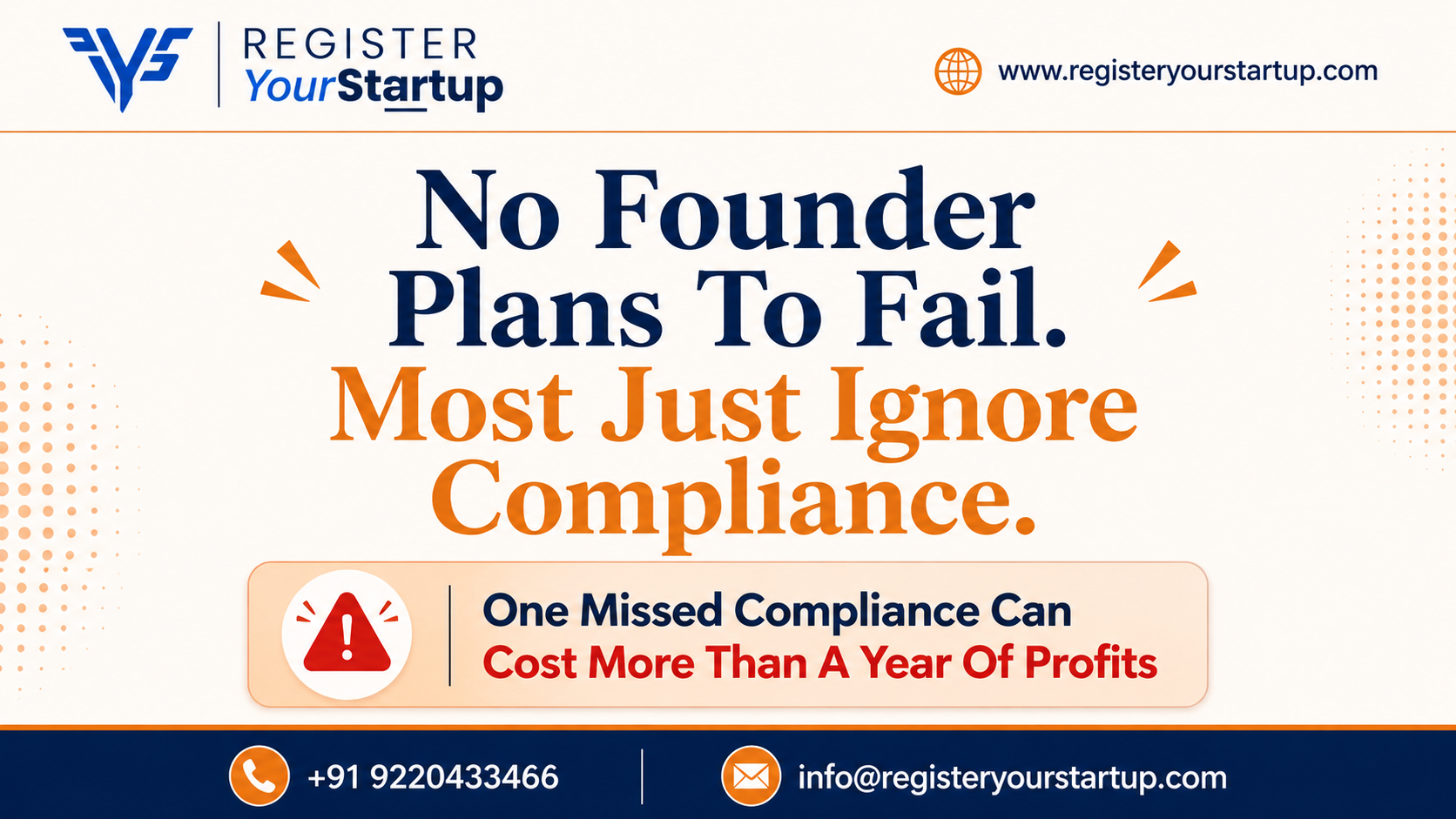
No Founder Plans To Fail. Most Just Ignore Compliance
Ask any founder why they started a business and you'll hear about growth, innovation, customers, and ambition.
Ask them about compliance, and the conversation often becomes uncomfortable.
The reality is simple:
Very few startups fail because of a lack of ideas. Many struggle because they ignore the legal and compliance foundations needed to support growth.
The Problem Isn't Non-Compliance. It's Delay.
Most founders don't intentionally violate laws.
They simply postpone important tasks:
• "We'll register the trademark later."
• "We'll do GST when business grows."
• "We'll sort out founder agreements after funding."
• "We'll file compliance next month."
Unfortunately, legal and regulatory problems don't wait for a convenient time.
Example 1: A startup spent two years building a promising technology product and finally attracted investor interest.
During due diligence, the investor discovered:
a) Pending ROC compliances
b) No founder agreement
c) Unclear shareholding records
d) Missing employment contracts
The investment discussions stopped.
The product wasn't the problem.
The risk was.
Investors fund businesses that are scalable and compliant—not businesses carrying hidden liabilities.
Example 2: A founder built a successful online business under a unique brand name.
The website, social media pages, and customer base were growing rapidly.
However, the founder never applied for trademark protection.
A third party obtained rights over a similar mark and challenged the business.
The founder faced the possibility of rebranding after years of effort and marketing investment.
The cost of a trademark application would have been insignificant compared to the cost of losing the brand.
Example 3: A business crossed the GST registration threshold but delayed registration because sales were increasing quickly.
Later, tax liabilities, interest, and penalties accumulated.
What could have been a routine compliance exercise became a financial burden.
What Smart Founders Understand
Successful founders treat compliance as a growth tool, not a legal burden.
They ensure:
- Company Registration
- Trademark Protection
- Founder Agreements
- GST Compliance
- ROC Filings
- Proper Contracts
- Accurate Financial Records
Because every investor, lender, buyer, or strategic partner eventually asks the same question: "Is this business properly structured?"
In the case of Tata Consultancy Services v. State of Andhra Pradesh (2004), the Supreme Court recognized the significant commercial value attached to business assets, systems, and intellectual property.
Similarly, Indian Courts have consistently emphasized the importance of proper corporate governance, documentation, and regulatory compliance in protecting stakeholder interests.
More recently, governance disputes highlighted in the case of Tata Sons Pvt. Ltd. v. Cyrus Investments Pvt. Ltd. (2021) demonstrated how structure, documentation, and compliance can directly affect the future of a business.
Most founders don't wake up planning to fail.
They simply underestimate the importance of compliance until it becomes a problem.
The startups that survive and scale are usually not the ones with the biggest ideas.
They are the ones with the strongest foundations.
Because growth creates opportunities.
But compliance protects them.
REGISTER YOUR STARTUP
Visit: www.registeryourstartup.com
#StartupIndia #StartupCompliance #BusinessRegistration #Entrepreneurship #StartupGrowth #FounderLife #CompanyRegistration #GSTRegistration #TrademarkRegistration #CorporateCompliance #StartupSuccess #BusinessGrowth #RegisterYourStartup #RYS #InvestorReady